How do you tell a compelling story in 90 seconds?
It’s not a new concept.
We’ve been telling short-form stories for decades, ever since the early days of TV commercials. The challenge has always been the same: how do you capture attention, build emotion, and deliver something meaningful, all within a limited amount of time?
There are, of course, structures you can follow. But more than anything, it comes down to clarity. Knowing what the story is really about, and what needs to be felt.
As a self-shooting director working in London and across the UK, I’ve noticed a shift toward longer-form content in recent years. But the 90-second documentary is still something many clients come back to.
In some cases, we’ll create a longer version, perhaps five minutes for web or streaming, and then a 90-second cut for social. And while I enjoy both, there’s something particularly satisfying about the shorter format.
Because condensing a story down to 90 seconds isn’t about cutting things away.
It’s about finding what matters most.
What can you really do in 90 seconds?
Quite a lot, as it turns out.
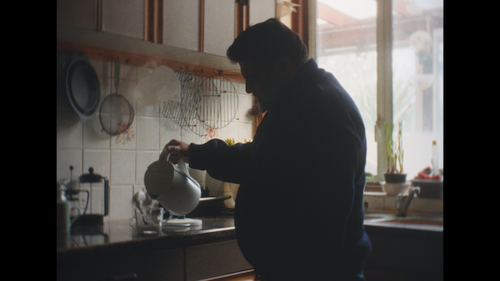
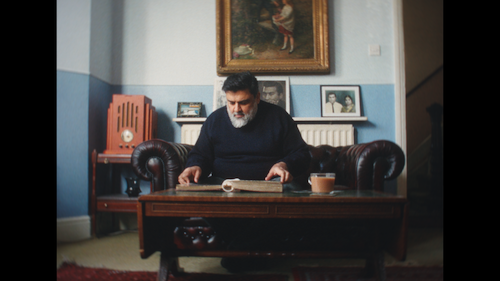
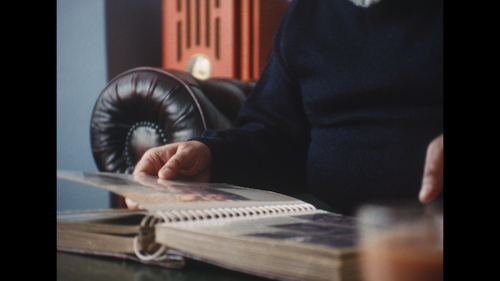
Take a recent film I created with Volkswagen, a story centred around Erum and his family’s connection to a much-loved vehicle.
Here’s how that story unfolds:
00:00–00:12
We open with a simple but immediate hook: “The van is gone.”
A moment of confusion and loss that draws the viewer in straight away.
00:13–00:33
We begin to understand the significance of the vehicle, not just as an object, but as something deeply tied to family, memory and identity.
00:34–00:43
A shift in the story.
Erum’s determination to find the van begins to take shape.
00:44–00:56
We move towards resolution. The van has been found.
But the emotional weight deepens, with his desire to restore it for his father before it’s too late.
00:57–01:12
The payoff.
Erum reunites the van with his dad. A genuine moment, made even more powerful by the inclusion of real, unscripted footage from the day.
01:13–01:30
The final moments land the story, reinforcing why this vehicle means so much to him and his family.









Why it works
There’s easily a longer film in this story.
You could explore it over 20 minutes, or even feature-length. But there’s something powerful about distilling it down, about telling just enough to let the audience feel it.
That’s the craft.
And in this case, there’s an added layer.
Everyone has their own relationship with a car. With memory. With family.
That familiarity is what makes the story resonate beyond just one person.
Final thoughts
For me, that’s what makes short-form storytelling so rewarding.
Not just saying more with less, but knowing exactly what to say, and when.
And when it lands, it really lands.